
+918042752699

Currently it only shows your basic business info. Start adding relevant business details such as description, images and products or services to gain your customers attention by using Boost 360 android app / iOS App / web portal.
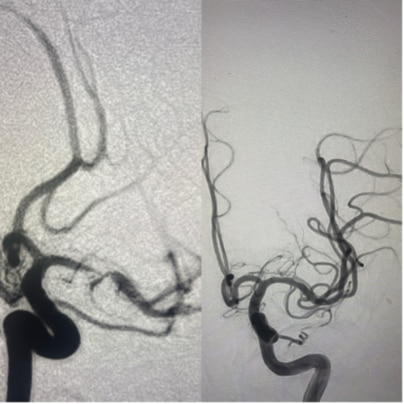
Here’s a **ready-to-publish website post** on **Intracranial Stenting** — written in clear, informative language suitable for a medical clinic blog, health website, or patient education page. --- # **Understanding Intracranial Stenting: A Life-Saving Procedure for Brain Artery Narrowing** **Intracranial stenting** is an advanced, minimally invasive procedure designed to treat significant narrowing (stenosis) of the arteries within the brain. This condition can lead to strokes or transient ischemic attacks (TIAs) — sometimes even when patients are on medication. Intracranial stenting offers a way to restore blood flow, reduce stroke risk, and improve long-term outcomes when other treatments fail. In this post, we’ll explore what intracranial stenting is, how it works, who it helps, the benefits and risks, and what patients can expect before, during, and after the procedure. --- ## 🧠 What is Intracranial Artery Stenosis? Intracranial arteries are the blood vessels inside the skull that supply critical oxygen and nutrients to the brain. Over time, these vessels can become narrowed due to atherosclerosis — a buildup of fatty deposits (plaques). Narrowed arteries reduce blood flow and increase the risk of clot formation. If severe enough, this condition may cause: * **Transient Ischemic Attacks (TIAs)** — temporary stroke-like symptoms that resolve. * **Ischemic Stroke** — permanent damage when blood flow is blocked. * **Chronic Brain Hypoperfusion** — ongoing low blood supply leading to neurological symptoms. When medication and lifestyle changes do not control symptoms or prevent recurrent stroke, clinicians may recommend intracranial stenting. --- ## 🔬 What Is Intracranial Stenting? **Intracranial stenting** is an endovascular procedure in which a small mesh tube — called a **stent** — is placed within a narrowed brain artery to expand it and restore normal blood flow. Unlike open brain surgery, this procedure is performed through the blood vessels using a catheter inserted through the groin or wrist. Image-guidance and specialized tools allow doctors to place the stent precisely where the artery is most narrowed. ### How It Works 1. **Preparation:** The patient receives local anesthesia and usually mild sedation. 2. **Access:** A tiny incision is made in the groin or wrist to access the arterial system. 3. **Guide Wire Navigation:** A guide wire and catheter are navigated up to the affected artery in the brain. 4. **Balloon Angioplasty (Optional):** Some procedures begin with a small balloon that gently widens the narrowed section. 5. **Stent Placement:** The stent is delivered through the catheter and expanded at the site of stenosis. Once expanded, it acts as a scaffold, holding the artery open. 6. **Confirmation:** Final imaging confirms proper stent placement and improved blood flow. --- ## 👩⚕️ Who Is a Candidate? Intracranial stenting is **not for everyone**. Most patients with mild or moderate artery narrowing respond well to: * Antiplatelet medications (like aspirin or clopidogrel) * Cholesterol-lowering drugs * Blood pressure control * Lifestyle modification Stenting is usually recommended for patients who: * Have **severe narrowing (typically 70–99%)** * Continue to have TIAs or strokes despite medication * Show evidence of poor cerebral blood flow * Cannot tolerate long-term aggressive medical therapy Your neurologist or interventional radiologist will determine candidacy based on imaging studies (like MRI, CT angiography, or cerebral angiography) and clinical history. --- ## 🧪 Risks and Considerations As with any medical procedure, intracranial stenting carries some risks. These include: ### Common Risks * **Bleeding or hematoma** at the access site * **Allergic reaction** to contrast dye * **Re-narrowing (restenosis)** of the artery * **Stroke during or after the procedure** ### Less Common but Serious Risks * Vessel rupture * Blood clot formation on the stent * Infection To minimize these risks, patients are usually on **antiplatelet medicines** before and after the procedure, and careful imaging ensures accurate stent placement. --- ## 📈 Benefits of Stenting For the right patients, intracranial stenting offers several advantages: ### 1. **Improved Blood Flow** By physically enlarging the narrowed artery, stents allow blood to reach the brain more effectively. ### 2. **Reduced Stroke Risk** Patients who continue to have TIAs or minor strokes despite medication may see fewer events after stenting. ### 3. **Minimally Invasive** Unlike open surgery, intracranial stenting is done via small incisions and does not require a craniotomy (opening the skull). ### 4. **Shorter Recovery** Most patients recover faster than with traditional surgery and can often go home within a day or two. --- ## 📆 Before the Procedure To prepare for intracranial stenting: * **Medical Evaluation:** Lab tests, imaging, and clinical exams are performed. * **Medication Review:** Your doctor may instruct you to stop certain medicines (e.g., blood thinners) or start antiplatelet therapy. * **Fasting:** You’ll likely avoid food and drink for several hours before the procedure. * **Consent:** Your doctor will explain risks and benefits so you can give informed consent. --- ## 🛌 During the Procedure The procedure usually lasts **1–3 hours** and is done in a specialized suite equipped with high-resolution imaging technology. You’ll be awake but sedated. Your care team monitors blood pressure, heart rate, and oxygen levels throughout. --- ## 🏥 After the Procedure After stenting: * You’ll rest in a recovery area for several hours. * Doctors will monitor neurological status and access site bleeding. * You’ll likely continue **antiplatelet medications** to prevent clotting on the stent. * Most patients stay in the hospital **1–2 days** for observation. --- ## 🚶 Long-Term Care and Follow-Up Long-term follow-up is important: * **Regular check-ups:** Your doctor will monitor your symptoms and blood pressure. * **Imaging studies:** Follow-up CT or MRI angiography may be done to check for restenosis. * **Lifestyle management:** Diet, exercise, smoking cessation, and controlling diabetes help prevent further atherosclerosis. --- ## 🧠 Real-Life Impact For many patients, intracranial stenting can mean the difference between a life lived with constant stroke risk and a life with restored blood flow and reduced neurologic events. It’s not a cure-all, but when medical therapy isn’t enough, it offers hope and a path forward. --- ## 📌 Key Takeaways * **Intracranial stenting** treats significant narrowing of brain arteries. * It’s a **minimally invasive**, catheter-based procedure. * Best suited for patients with **severe stenosis and recurrent symptoms**. * Carries risks, and candidacy must be carefully evaluated. * Offers improved blood flow and reduced stroke risk in appropriate


