
+918042752699

Currently it only shows your basic business info. Start adding relevant business details such as description, images and products or services to gain your customers attention by using Boost 360 android app / iOS App / web portal.
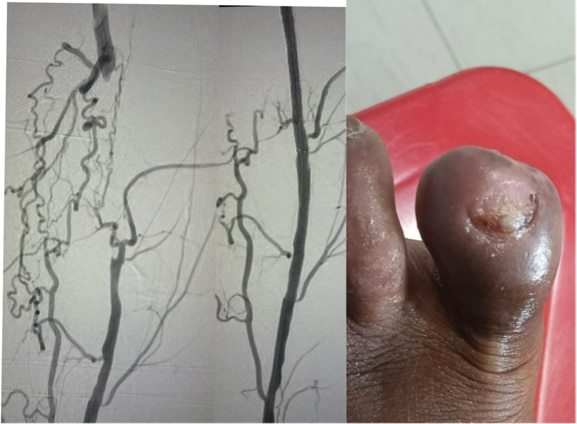
## Diabetic Foot Vascular Intervention – Limb Salvage Through Advanced Endovascular Care Diabetic foot is one of the most serious and disabling complications of diabetes. Long-standing diabetes damages both nerves and blood vessels, leading to poor wound healing, recurrent infections, non-healing ulcers, gangrene, and in severe cases, amputation. Fortunately, with advances in vascular and endovascular techniques, limb salvage is now possible in a majority of patients when treated at the right time. Diabetic Foot Vascular Intervention focuses on restoring blood flow to the affected limb using minimally invasive techniques. This specialized treatment plays a critical role in preventing major amputations and improving quality of life. --- ## Understanding Diabetic Foot and Peripheral Arterial Disease (PAD) Patients with diabetes are at high risk of developing **Peripheral Arterial Disease (PAD)** — a condition where arteries supplying blood to the legs become narrowed or blocked due to atherosclerosis. In diabetics, these blockages often affect smaller arteries below the knee, making the condition more complex. Reduced blood supply leads to: * Non-healing foot ulcers * Black discoloration of toes (gangrene) * Severe rest pain in the foot * Recurrent infections * Delayed wound healing * Risk of amputation When blood flow is critically reduced, it is termed **Critical Limb Ischemia (CLI)** — a limb-threatening condition requiring urgent vascular intervention. --- ## When is Vascular Intervention Needed? Diabetic foot vascular intervention is recommended in patients who have: * Non-healing ulcers for more than 2–4 weeks * Gangrene or blackened toes * Severe foot pain at rest * Reduced or absent foot pulses * ABI (Ankle Brachial Index) < 0.9 * Poor response to conservative wound care Early referral to a vascular or endovascular specialist significantly improves limb salvage outcomes. --- ## What is Diabetic Foot Vascular Intervention? Diabetic foot vascular intervention is a minimally invasive, image-guided procedure that restores blood flow in blocked leg arteries without open surgery. Using advanced imaging techniques, blockages are crossed with fine wires and treated with: * Balloon Angioplasty * Drug-Coated Balloon (DCB) Angioplasty * Stenting * Atherectomy (plaque removal) * Pedal Loop Revascularization These procedures are performed under local anesthesia through a small needle puncture, usually in the groin or wrist. --- ## Types of Endovascular Procedures ### 1. Balloon Angioplasty A tiny balloon is passed across the blockage and inflated to open the narrowed artery. This improves blood flow immediately. ### 2. Drug-Coated Balloon (DCB) A special balloon coated with anti-proliferative medication prevents re-narrowing of the artery after angioplasty. ### 3. Stenting In certain cases, a small metallic mesh (stent) is placed to keep the artery open permanently. ### 4. Atherectomy A specialized device removes hardened plaque from severely calcified arteries, especially common in diabetic patients. ### 5. Below-Knee and Pedal Interventions Diabetic patients often have blockages in small arteries below the knee and in the foot. Advanced techniques such as pedal artery angioplasty help restore direct blood flow to the wound area (angiosome-directed therapy). --- ## Benefits of Endovascular Treatment Compared to traditional bypass surgery, vascular intervention offers: * Minimally invasive procedure * No large surgical cuts * Performed under local anesthesia * Short hospital stay (often 1–2 days) * Faster recovery * Reduced risk in elderly or high-risk patients * Repeatable procedure if needed * High limb salvage rates These advantages make endovascular therapy the preferred first-line treatment in most diabetic foot patients. --- ## The Procedure – Step by Step 1. Clinical evaluation and Doppler ultrasound assessment 2. CT angiography or digital subtraction angiography (DSA) to map blockages 3. Local anesthesia is given 4. A thin catheter is inserted through a small puncture 5. Blocked arteries are crossed with micro-wires 6. Balloon angioplasty or stenting is performed 7. Blood flow is restored 8. Compression is applied at puncture site The procedure typically takes 45–90 minutes depending on complexity. --- ## Post-Procedure Care After successful revascularization: * Dual antiplatelet medications are prescribed * Strict diabetes control is essential * Wound care and dressing management * Offloading techniques for ulcer healing * Regular follow-up Doppler assessment Proper multidisciplinary care involving diabetologists, wound care specialists, and vascular specialists ensures optimal healing. --- ## Success Rates and Limb Salvage With modern endovascular techniques, limb salvage rates are significantly improved. Early-stage ulcers have excellent healing outcomes when adequate blood flow is restored. However, delay in treatment increases the risk of infection spreading to deeper tissues and bone (osteomyelitis), which may necessitate amputation. The key message: **Early intervention saves limbs.** --- ## Why Early Diagnosis Matters Many diabetic patients ignore early symptoms such as mild foot pain or small ulcers. Unfortunately, diabetic neuropathy reduces pain sensation, allowing wounds to worsen unnoticed. Warning signs that require urgent evaluation: * Non-healing wound * Color change in toes * Cold feet * Loss of hair over legs * Reduced walking distance * Rest pain at night A simple vascular screening can identify PAD early. --- ## Multidisciplinary Approach Successful diabetic foot management requires coordination between: * Interventional Radiologist * Vascular Surgeon * Diabetologist * Wound Care Specialist * Podiatrist * Infectious Disease Specialist Combining revascularization with infection control and proper wound care provides the best chance for limb preservation. --- ## Who is at High Risk? Patients with the following risk factors need regular vascular screening: * Long-standing diabetes (>10 years) * Smoking history * Hypertension * High cholesterol * Kidney disease * Previous ulcer or amputation Preventive vascular evaluation can help detect silent arterial disease before complications arise. --- ## Advanced Techniques in Modern Diabetic Foot Care Recent innovations include: * Intravascular Ultrasound (IVUS) guidance * Drug-eluting technologies * Retrograde pedal access techniques * Hybrid procedures combining open and endovascular methods These advancements have revolutionized limb salvage strategies. --- ## Frequently Asked Questions ### Is the procedure painful? No. It is performed under local anesthesia and is generally well tolerated. ### How long is hospital stay? Most patients are discharged within 24–48 hours. ### Is it safe for elderly patients? Yes. It is safer than major open surgery and suitable for high-risk patients. ### Can the blockage recur? Yes, but regular follow-up and medical therapy reduce recurrence risk. --- ## Preventing Diabetic Foot Complications Prevention remains crucial. Patients should: * Maintain strict blood sugar control * Inspect feet daily * Avoid walking barefoot * Wear proper footwear * Keep skin moisturized * Seek early medical attention for any wound --- ## Conclusion Diabetic foot vascular intervention has transformed the management of limb-threatening ischemia. With timely diagnosis, expert endovascular treatment, and coordinated wound care, most limbs can be saved. If you or your loved one has a non-healing diabetic foot ulcer, early vascular evaluation is critical. Modern minimally invasive techniques offer hope, faster recovery, and most importantly — limb preservation. **Early intervention can prevent amputation and restore quality of life.**


